
Chains need to pick a niche
Pick an identity, invert and become

What do you want to be/to be known as? This applies to life as much as it does to chains: choose what you want to be, your identity, your ideal self. Look at what others who already are that and work backwards.
More importantly, this question is important to steer us in the right direction for the coming year. In a time where L2s are plenty, most dying without purpose and burning through their treasury and VC raise.
Lets put this thought experiment for Etherlink, the non-custodial evm rollup of Tezos.
What should Etherlink focus on for max efficiency and optimal outcome?
I think this is a good thought process for any chain to go through.
Firstly, what is Etherlink now?
Etherlink has brought on a lot of solid DeFi applications such as Gearbox, Lombard, Oku (which brought on Uniswap V3 and Morpho vaults).
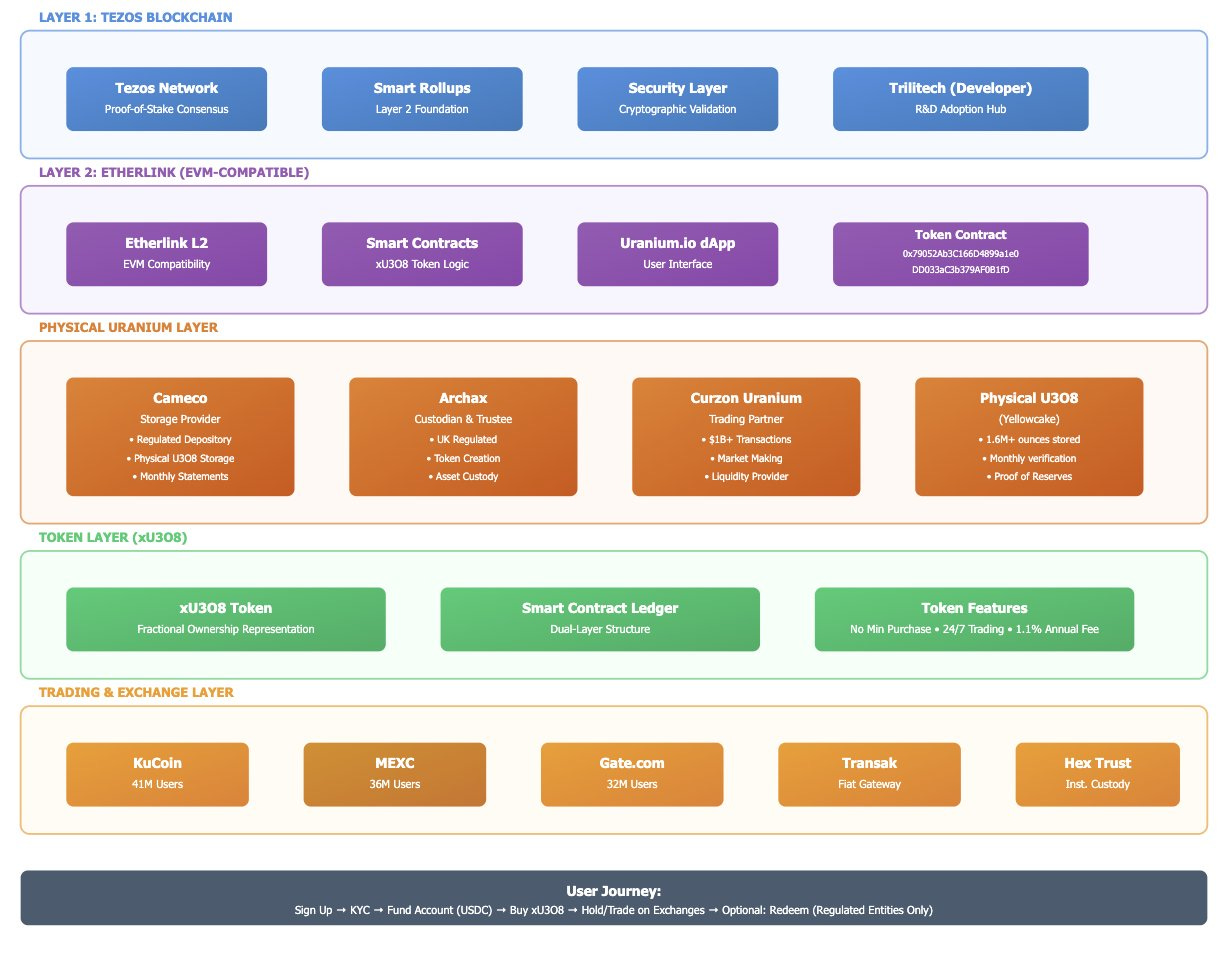
Etherlink has a strong RWA positioning as well with Midas, Spiko and Uranium.
Uranium.io has also proven Trilitech’s ability to incubate and build useful and impactful dapps in-house. Uranium.io has also proven that Trilitech has the resources and know-how for a full fledge tokenisation stack.
Apple Farm’s 2 seasons thus far have also shown Etherlink’s ability to attract liquidity (ATH TVL $$80M) and manage it dynamically across the various the various applications.
From here, the 2 clear paths are DeFi and RWA. What will Etherlink look like if it chose to focus on either?
The Premier DeFi Blockchain
The closest to this would be Katana, the DeFi chain by Polygon and GSR.
What are some core features of Katana?
VaultBridge Mechanism: Enables bridging of assets like ETH, USDC, and WBTC to yield-generating vaults on Ethereum, with earned yield in USDT recycled back to Katana to boost incentives, trading depth, and lending markets, ensuring capital remains productive.
Four Revenue Engines: Includes sequencer fees recycled into Chain-Owned Liquidity (CoL), VaultBridge yield shared as incentives, CoL strategies for automated liquidity management, and AUSD stablecoin backed by offchain assets like U.S. Treasuries for stable returns, forming a self-reinforcing economic flywheel.
Focused Liquidity in Key Protocols: Centers on essential DeFi primitives such as Morpho for lending, Sushi for spot trading, an upcoming perpetual DEX, and a memecoin launchpad, concentrating liquidity for efficiency and depth rather than fragmentation.
Etherlink is pretty close to becoming Katana. If we can find revenues and yields to power the apple farm incentives, it will form a sustainable economic engine for Etherlink to continuously attract dapps and liquidity.
Key Institutional Tokenisation Venue
Like I mentioned earlier, Etherlink already has a decent range of RWA tokens:
Uranium $u3o8
Spiko $USTBL $EUTBL
Midas $Re7Yield $mBASIS $mMEV $mTBILL
Uranium has also achieved the full tokenisation stack from institutional custody services like Hex Trust, CEX listing on Kucoin, on-ramp Transak, listed commodity trading firm Curzon for custody and regulated RWA platform Archax. It has also achieved DeFi composability with Oku Trade’s Morpho vaults as collateral for borrowing stables.
The next natural step is to use the existing structure to build out tokenisation as a service similar to the recent Centrifuge Whitelabel.
Key features of Centrifuge Whitelabel:
Modular and Customizable Platform: Provides a flexible, extensible framework for asset managers, fintechs, and DeFi builders to create tokenized financial products with institutional-grade security and efficiency.
Full Lifecycle Management: Handles the entire process of real-world asset tokenization, including issuance, investor onboarding, NAV calculations, redemptions, and integration with multichain liquidity.
Audited and Standardized Components: Features pre-audited tools for tokenization and management, along with a standardized architecture that ensures DeFi composability and cross-chain interoperability.
Support for Diverse Fund Types: Accommodates various asset classes such as private credit, structured products, energy assets, insurance, and equities.
Native DeFi Integration: Offers seamless connectivity to DeFi protocols, reducing development time and complexity while maintaining high security standards.
And the closest chain to a proper RWA blockchain would probably be Plume Network.
What does Plume Network have that makes it a premier infrastructure for tokenised assets to be there?
Built-in Compliance and Regulatory Tools: Features native KYC/AML verification, tax infrastructure, and SEC-approved transfer agents to ensure regulatory compliance, allowing issuers to meet standards for diverse assets while facilitating faster onboarding and ownership records.
Full-Stack Tokenization Toolkit: Includes tools like Plume Arc and Nexus for simplifying RWA deployment, with specialized smart contract templates, data integration, and modular cross-chain yield delivery to support assets such as treasuries, real estate, and private credit.
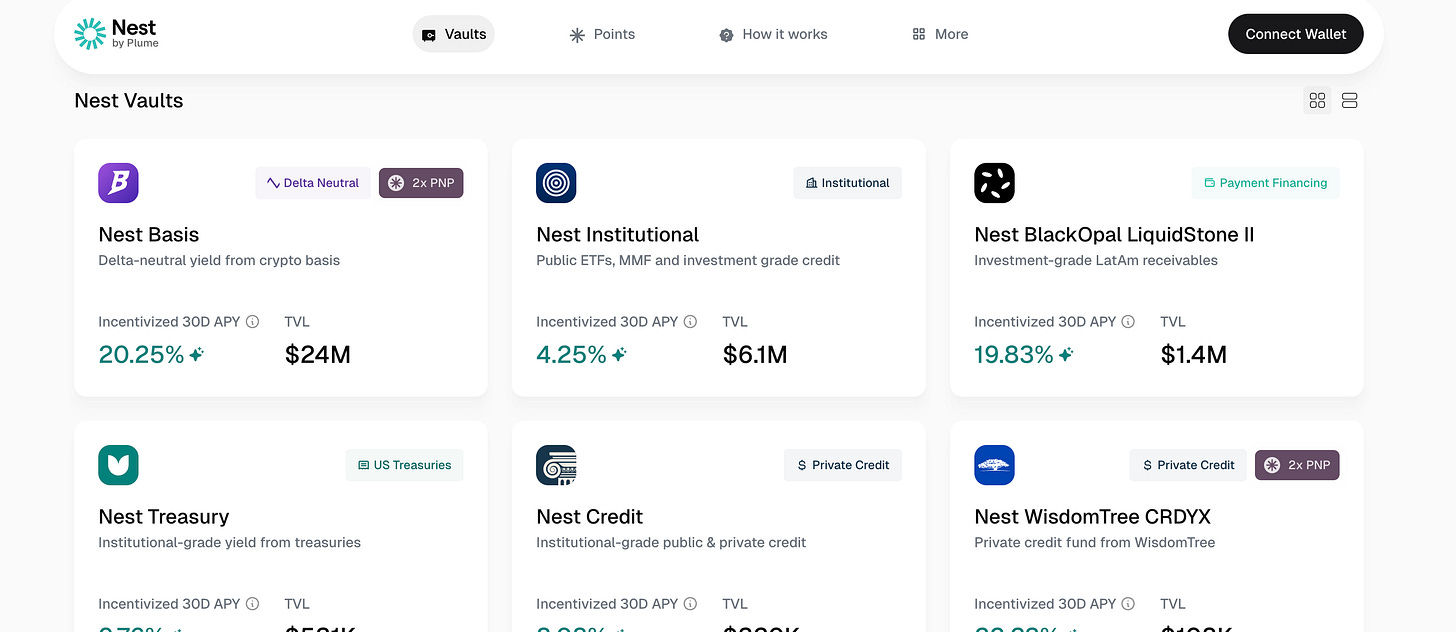
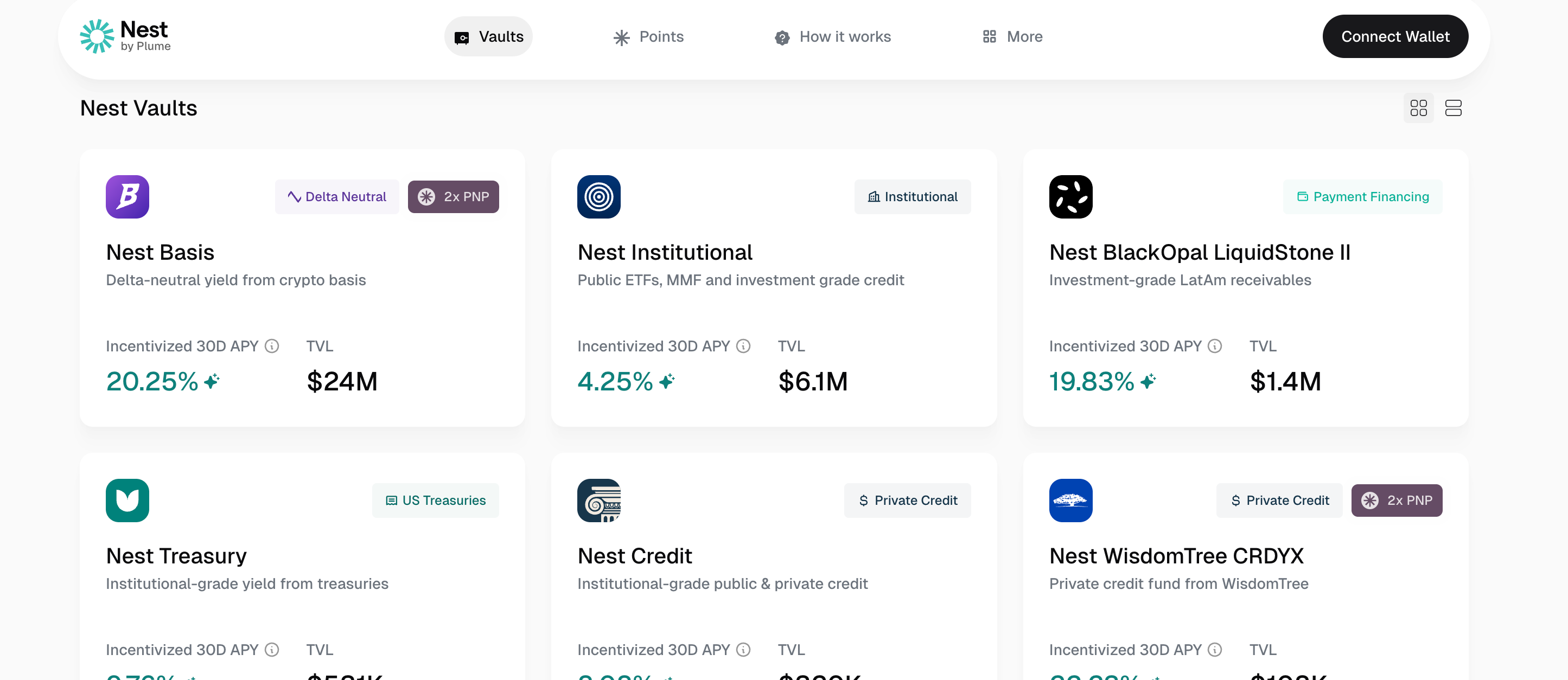
Nest Staking Protocol: As the flagship app, Nest provides permissionless vaults for staking stablecoins to earn institutional-grade yields from audited RWAs backed by firms like Blackstone and PIMCO, with no lock-ups, real-time security monitoring, and composable liquidity tokens.
Ecosystem Integrations and Liquidity Focus: Partnerships with providers like OKX Earn, Morpho, and now Securitize enable global access, multichain deployments, and high-security environments, fostering a network effect for tokenized assets with transparent, enterprise-grade infrastructure.
And if Etherlink were to choose alternative paths, the next one which other L2s have decided to do is with incubation of dapps:
Find/Build the Killer Dapp to Achieve Mass Adoption
Interesting pivots usually entail the first principle of getting the killer app for mass adoption.
Scroll’s Open Economy & USX
Scroll is running Open Economy, an incubator for startups with hyper concentration. They recently launched Open Campus: a year-long bet on three projects to build the next breakout consumer crypto app.
Along with that, the only thing Scroll is known for is the Etherfi cards. They have decided to focus on what they are good at and built their own Neobank app & stablecoin USX, inline with the crypto PMF of stablecoins and superior yields.
Manta Labs
Manta on the other hand has gone on to focusing on Manta Labs, building out apps such as Junk.fun on Solana and Superfortune888 on Bsc, focusing purely on virality and high MAUs.
The path forward isn’t clear, we are entering bear. But it is clear that general chains do not work anymore. Pick an identity and do one’s best to become the peak version of it.