
Obol Network: Exploring Distributed Validator Technology
Embark on the journey to decentralise validator nodes with Obol Network.

Written by @minhdonz
Introduction
Obol is building a Distributed Validator Technology, enabling the duties of an Ethereum validator to be performed across a cluster of nodes in order to improve resilience as compared to running a validator on a single node. The tech works using a middleware called Charon whose responsibility is to connect the cluster of nodes together. Obol Network’s primary purpose is to facilitate low-trust Ethereum staking yield access, making it a foundational component for various Web3 applications.
Category: Staking Operation Middleware
Twitter: @ObolNetwork
Website: Obol Network
Since we are on the topic of decentralising validator nodes, read about how decentralised Lido really is

Growth
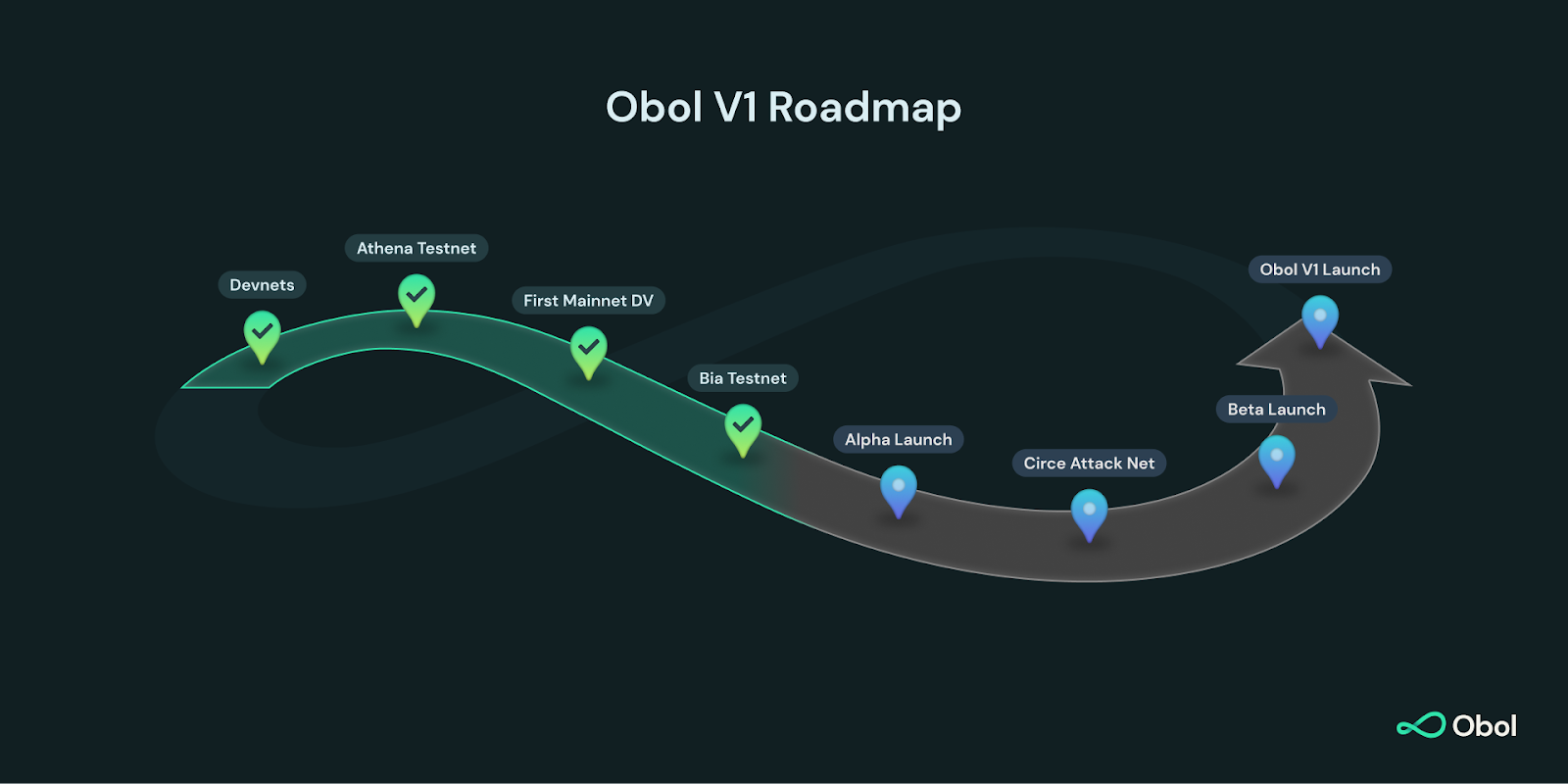
Athena Testnet
5000+ signups, many of which are at-home node operators, 200+ successful Distributed Key Generation (DKG) ceremonies, 100+ Distributed Validator Clusters signing attestations across 40+ countries.
Bia Attack Net (2nd Testnet)
In ~ 60 days, there were 1600+ distributed validator clusters run by 9000+ nodes around the world and 60+ organizations
Alpha Launch
First DV launched on mainnet
Partners include EtherFi, DSRV, Allnodes, Ankr, Stakely.io, etc.
2 successful pilot (v1 and v2) testings with Lido
What is Distributed Validator Technology?
Distributed Validator Technology (DVT) allows a cluster of nodes run by an individual, group, or community of operators to collaboratively run one or more validators for Ethereum.
DVT addresses the following challenges:
Uptime for most validators is low
Slashing risks related to attestation and compromised private keys
High economic barrier of entry for individual stakers (32ETH)
Centralisation of operators and clients
Validators need periodic maintenance such as database pruning and client updates that incur downtime and inactivity penalties
The Tech Underneath
Charon
Charon is a middleware that allows multiple Ethereum validator clients to operate together as a distributed validator (DV). It acts as an intermediary between a standard validating client and its connected beacon node, handling the API traffic.
Features
Byzantine-Fault Tolerance: Charon's design ensures that it can continue to function even in the face of malicious or failing nodes, as long as a supermajority of working/honest nodes is maintained.
Unified Validator: Multiple Charon clients work together, behaving as a single, unified proof-of-stake validator.
Threshold Aggregation: It supports threshold aggregation of BLS private key shares, essential for secure and consistent operations.
Distributed Key Generation
Imagine having a master key that can only be used when a certain number of individuals come together, each with their unique key share. It's like assembling a team of superheroes, where their combined powers create something greater and more secure. That's the essence of DKG.
Here's a simplified rundown of how it works in Obol Network:
Creating the Team (Operators and Charon Clients): The Operators are like the team leaders, and their Charon clients are the technical support. Each Operator and Charon client is identified using special keys, ensuring secure communication and coordination.
Planning the Mission (Cluster Definition Creation): Before anything begins, a plan (the cluster definition) is put together, specifying the intended configuration. It includes aspects like the threshold for the key (how many key shares need to come together for the key to function), and the specific methods to be used in the generation process. Think of it as drawing up a strategic blueprint for the mission.
Carrying Out the Ceremony (DKG Ceremony): This is where the magic happens. Operators load the cluster definition files into their Charon clients and establish connection with each other before carry out the DKG ceremony, creating those distributed validator keys mentioned earlier. They ensure that even if some of the team members (nodes) are offline, the network can still function smoothly. This is achieved through complex but secure methods that make sure everyone is on the same page (or curve, in mathematical terms!).
Backing up the Success (Ceremony Artifacts): At the end of the ceremony, several vital files are created, including the shared keys that represent a Distributed Validator. It's like saving the codes to a digital vault.
Ensuring Trust (DKG Verification): Trust is essential, so various methods are used to verify that everything was conducted fairly and securely. These include checks and balances to ensure the integrity of the Distributed Validator Key Generation.
Conclusion
Centralisation has never been the ethos of Ethereum and with Obol Network and DVT, staking is standing before a future where decentralisation among validator nodes will increase drastically. Obol is at the forefront of this new staking paradigm, being backed by validator node operators powerhouse in the blockchain space like Blockdaemon, DSVR, Attestant, Figment, Stakely, etc. among other renowned VCs like Coinbase Ventures, Spartan, Delphi, IOSG, etc.