
Tokenising Private Equity
Doing it right, trillions.


Tokenise up the risk curve
Tokenization is rapidly gaining traction across diverse asset classes in 2025, transforming illiquid holdings into accessible, tradable digital assets on blockchain platforms, with the global asset tokenization market projected to reach $2.08 trillion this year and expand to $13.55 trillion by 2030 at a compound annual growth rate (CAGR) of 45.46%. Currently, prominent examples include real estate, which is expected to see up to $4 trillion tokenized by 2035, equities such as tokenized versions of Tesla (bTSLA), Nvidia (bNVDA), and Apple (bAAPL) experiencing surging daily volumes, commodities like gold and oil, and even niche sectors such as microbiome science (e.g., MicrobiomeDAO) and neurotech startups (e.g., NeiryLab), contributing to a tokenized real-world asset (RWA) market that surged to over $25 billion in Q2 2025—a 245x growth from 2020.
This adoption naturally extends up the risk curve to higher-volatility assets like private equity, where tokenization unlocks liquidity in traditionally gated, illiquid markets valued at $13 trillion globally in 2025, enabling fractional ownership, 24/7 trading, and broader investor access without the typical $1 million minimums or multi-year lockups.
While tokenization of private equity has already manifested in various forms—such as platforms like Robinhood offering crypto-linked exposure to companies like OpenAI and SpaceX, or institutional tokenized funds growing amid portfolio diversification goals (with 76% of firms planning investments by 2026)—it has yet to achieve full product-market fit due to persistent flaws, including regulatory hurdles, opaque reporting, scalability issues in volatile crypto environments, and challenges in balancing compliance with retail inclusivity, often leading to uneven investor protection and limited mainstream uptake.
The Evolving Spectrum of Private Equity Platforms
The landscape of private equity and startup funding has undergone a seismic shift in recent years, blending traditional finance with blockchain innovation. What we have now are a bunch of siloed platforms each with their own take on how it should be done.
Traditional Platforms: ADDX & Arta

Platforms like ADDX and Arta Finance represent the first iteration on this model, using technology to lower barriers while maintaining regulatory compliance.
ADDX, a Singapore-based platform licensed by the Monetary Authority of Singapore (MAS), focuses on fractional access to private markets including private equity, hedge funds, and real estate. It allows accredited investors to start with as little as $5,000, enabling anytime exits from $100 and tokenized fractions for liquidity. This digitization makes private assets more approachable, but it still requires accreditation and thorough ID verification, limiting it to a select audience.
Similarly, Arta Finance targets accredited investors with AI-driven wealth management, offering private equity, venture capital, and private credit starting at $25,000 minimums. It boasts low fees (as little as 0.5%) thanks to technology and provides access to top-tier fund managers typically reserved for institutions. Arta emphasizes diversification and structured products, but like ADDX, it operates within strict regulatory frameworks, enforcing KYC and accreditation to ensure investor protection.
These platforms excel in compliance and asset quality but fall short in true democratization—retail investors are often locked out due to wealth thresholds and bureaucratic hurdles.
The Crypto Shift: CoinList and Early Token Sales
As blockchain gained traction, platforms like CoinList bridged traditional private equity with crypto by facilitating initial coin offerings (ICOs) and token sales for emerging projects. CoinList, launched in 2017, serves as a compliant exchange and launchpad, giving investors early access to high-potential cryptocurrencies like Solana and Algorand. It connects blockchain projects with investors through tokenized sales, emphasizing regulatory adherence (e.g., no FDIC insurance but structured for U.S. compliance).
CoinList's model introduces speed and global accessibility, with users participating in token launches via lotteries or queues. However, it often favors whales and venture capitalists, leading to uneven distribution and limited slots for retail participants.
The Merit-Based Wave: Legion and Echo
Building on CoinList's foundation, newer platforms like Legion and Echo introduce merit-based systems to make fundraising fairer and more inclusive, reviving ICOs with a focus on reputation and community.
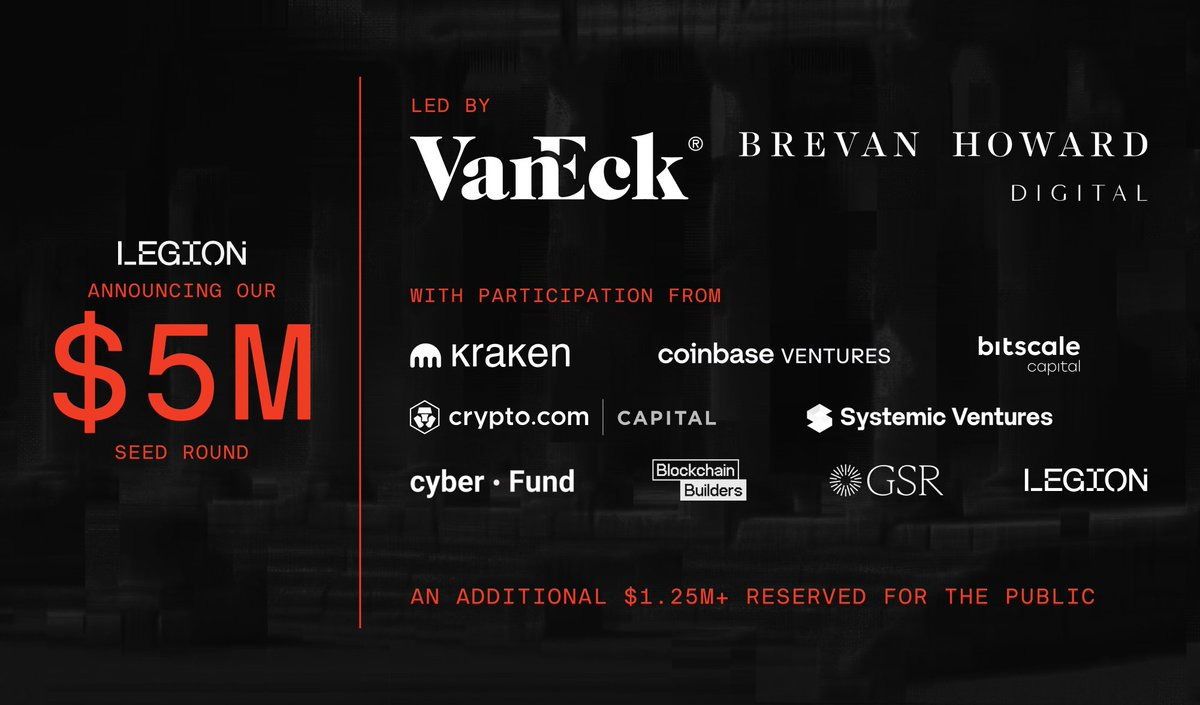
Legion, which raised $5 million in seed funding, is a MiCA-compliant, on-chain platform that uses a reputation system to allocate investment opportunities based on merit rather than wealth. It targets non-accredited investors in Europe, bridging projects with retail via transparent, compliant ICOs on networks like Arbitrum. Features include vesting for founders and community voting, aiming to foster sustainable growth and reduce dumps.
Echo, founded by Jordan Fish (aka Cobie), operates as a collective investment platform where angel investors pool resources for crypto deals. In early 2025, it hinted at an ICO product to enable fair token launches, emphasizing group decision-making and merit over connections. Both platforms address CoinList's flaws by prioritizing compliance (e.g., MiCA for Legion) and inclusivity, but they remain crypto-centric, with potential scalability issues in volatile markets.
Tokenization isn’t just a trend, it’s inevitable. Assets, companies, communities, and creators will live onchain.
Internet Capital Markets (ICM) Meta

Launchcoin, spearheaded by entrepreneur Ben Pasternak via the Believe.app, pushed boundaries by allowing anyone to launch memecoins through simple X (Twitter) replies, tokenizing ideas on Solana's Meteora DEX.
Funding Bootstrap: Revenue sharing of trading fees
Its standout innovation was revenue sharing: Trading fees (around 2%) were split, with creators receiving 1% directly, fostering ongoing funding from liquidity pools. Tokens "graduated" to Meteora at $100,000 market cap, enabling dynamic fees and bypassing KYC for viral, community-driven launches.
Despite early hype—Launchcoin rallied 5,000% from sales—the platform faced challenges. Volatility, founder token dumps, and sniper bots eroded trust, leading to overhauls like 24-hour fee blocks. Ultimately, it struggled to sustain momentum amid memecoin market saturation, low quality of startups and the lack of incentives for the founders to continue building it as the fees they earned from the trading volumes of their token alone was a lot.
Lessons Learned: Building the Perfect Startup/Private Equity Platform
Drawing from these platforms, an ideal hybrid would blend traditional stability with crypto agility. Core features include:
- Low Barriers and Inclusivity: Like ADDX and Arta's fractional investing, but with Launchcoin's no-KYC social onboarding and Legion's merit-based allocation to empower retail without accreditation walls.
- Compliance and Anti-Rug Safeguards: MiCA/SEC-inspired regulations from Legion/CoinList, plus vesting schedules, community voting (Echo-style), and monthly fee caps (e.g., $10k) to prevent dumps, as seen in Launchcoin's pitfalls.
- Revenue Sharing and Sustainability: Innovate on Launchcoin's fee model (2.5% trading fees routed to founders' native chains) with escrow for excess, ensuring predictable funding without incentivizing quick exits.
- Tech-Enabled Seamlessness: Chain-agnostic abstraction (e.g., bridges like Wormhole), account abstraction for wallet-less access, and analytics dashboards for portfolio tracking.
- Merit and Community Focus: Reputation systems from Legion/Echo to reward active participants, combined with CoinList's quality vetting to filter high-potential projects.
This platform would be mobile first for 24/7 global access, integrating fiat on-ramps and social verification to bridge web2 users.
The Future: Web2 Embraces Web3 Tokenization
This spectrum's trajectory points to widespread web2 adoption of web3 via tokenized private equity. Platforms like Coinbase and Robinhood are already tokenizing stocks for constant accessibility; extending this to startups democratizes funding, allowing retail crowds to back early-stage ventures without VC gatekeepers. Startups gain alternative capital through sustainable fees and communities, reducing reliance on dilutive rounds.
In early 2025, memecoins drive 65% of Solana DEX volume, signaling tokenization's potential. The perfect platform could unlock trillions in private markets, creating a win for equitable finance.